


Every great haircut, whether it is done in a salon chair or at your own bathroom mirror, starts long before the first snip. It starts with sectioning. Skip this step or rush through it, and even a simple trim can end up uneven. Get it right, and cutting hair becomes far less intimidating. Once your haircut is complete, follow our How to Blow Dry Hair Properly guide to add volume, reduce frizz, and style your freshly cut hair for a smooth, salon-quality finish.
Why Sectioning Matters So Much
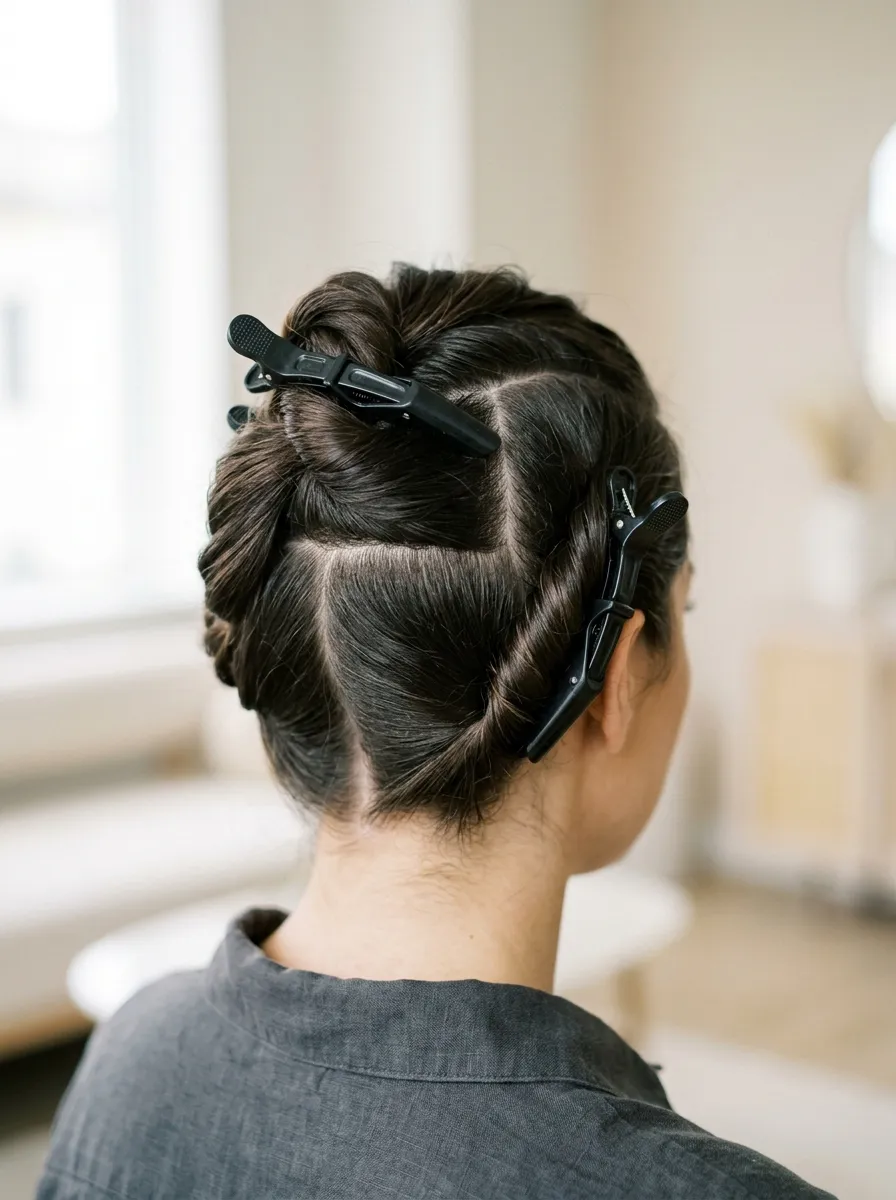
Sectioning is really just organizing the hair into manageable, controlled parts so you are never cutting a huge chunk at once. It keeps the rest of the hair out of the way, helps you track exactly how much length you are removing, and makes sure both sides end up matching.
Without it, hair falls forward unpredictably, sections blend into each other, and small mistakes turn into big ones fast.
Gather What You Need First
Before touching a single strand, set yourself up properly.
- Sectioning clips or clamps, at least four to six
- A fine tooth comb
- A handheld mirror if you are cutting your own hair
- Good lighting, natural daylight works best
Start With a Clean Center Part
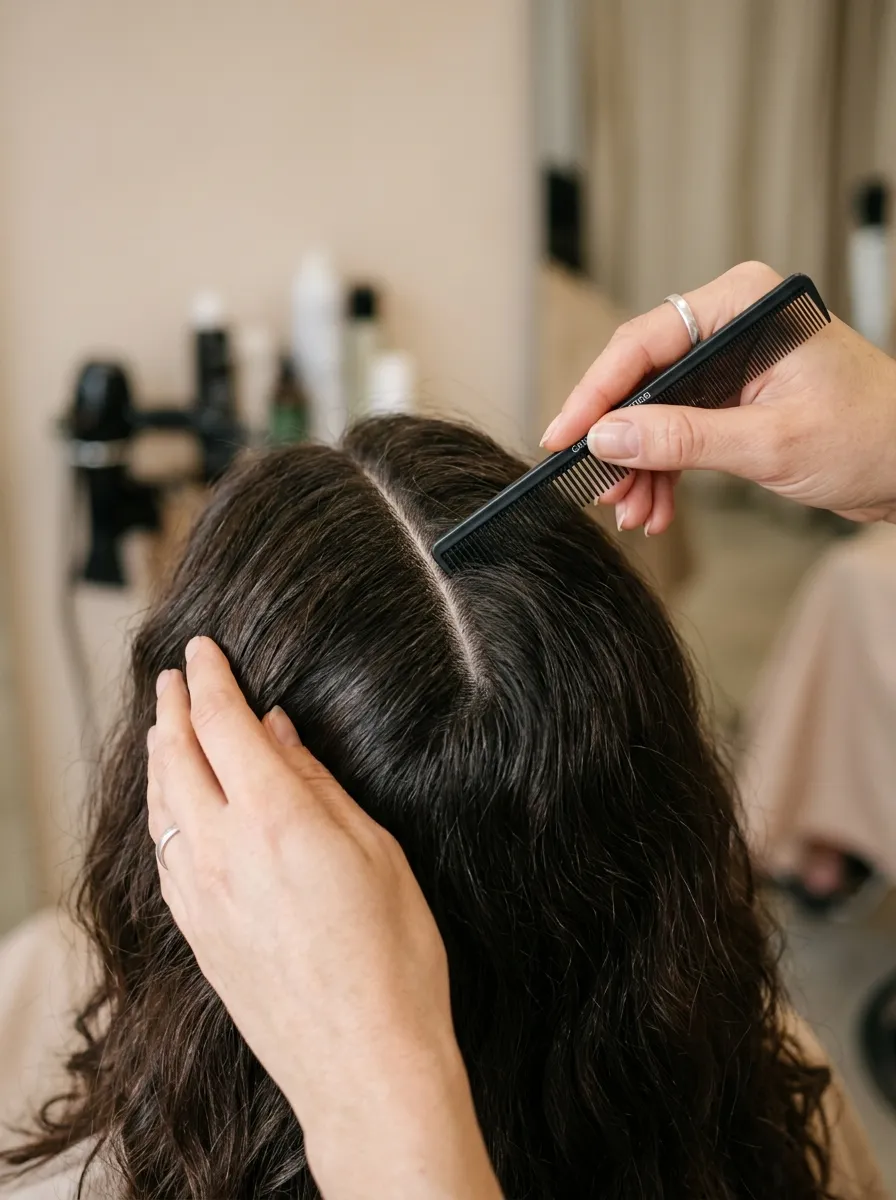
The first cut you make is not with scissors, it is with a comb.
- Comb hair straight back, then part it evenly down the center from forehead to nape
- Use the comb tip to create a clean, straight line
- Check in the mirror that the part looks even from the front
Create the Horizontal Section
Next, divide the hair from ear to ear across the top of the head.
- Comb a line from the top of one ear, over the crown, to the top of the other ear
- Clip the front section forward, away from the back
- Clip the back section up and out of the way
This single line separates your top and crown hair from the length in the back, which is essential for an even cut.
Divide Into Quadrants
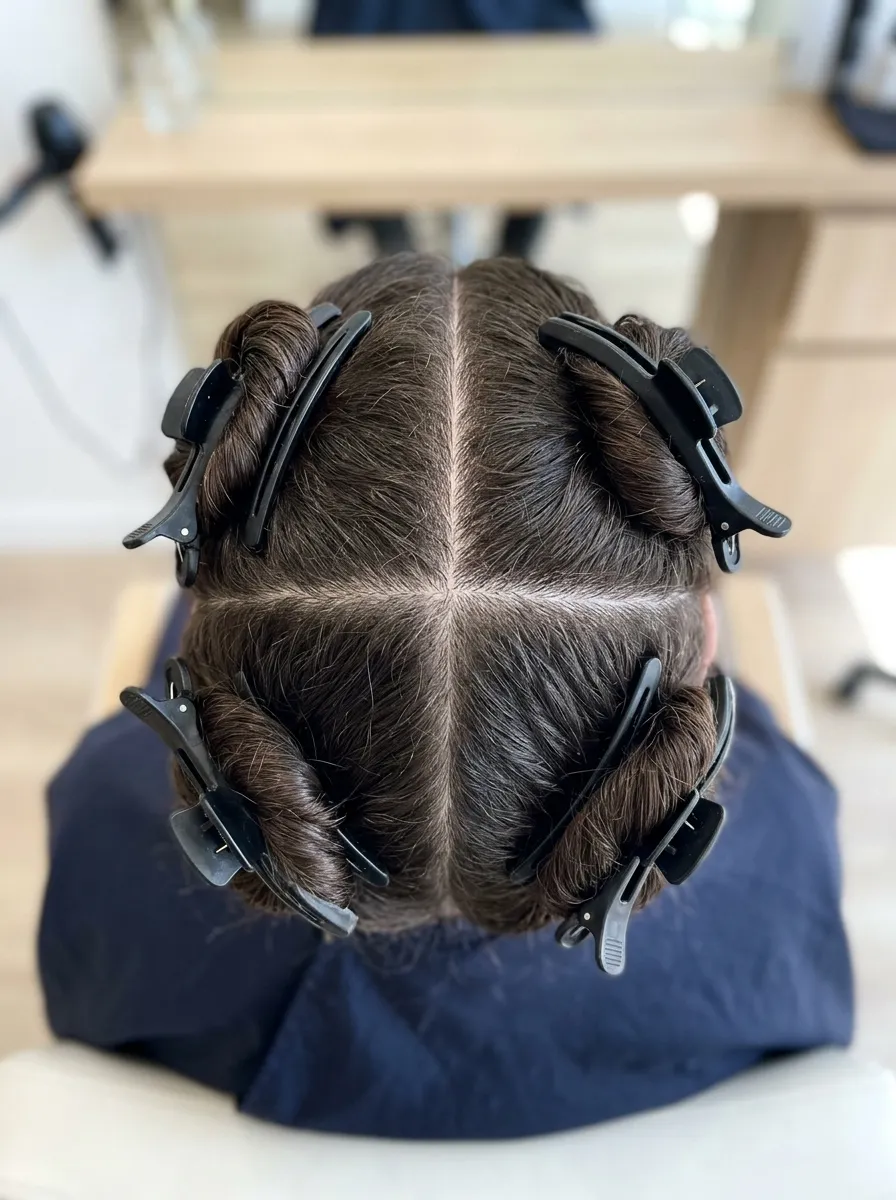
With the center part and the ear to ear line already in place, you now have four clear sections.
- Front left
- Front right
- Back left
- Back right
Clip each one separately so no loose strands sneak into the section you are actively cutting.
Work in Small Subsections
Even within each quadrant, do not grab everything at once.
- Take horizontal sub sections about one to two inches thick
- Always comb through each sub section before cutting
- Release one section at a time as you finish it, keep everything else clipped
Smaller sections give you far more control and make it much easier to keep both sides even.
Always Cross Check With the Opposite Side
One of the most overlooked sectioning habits is comparing sides as you go, not just at the very end.
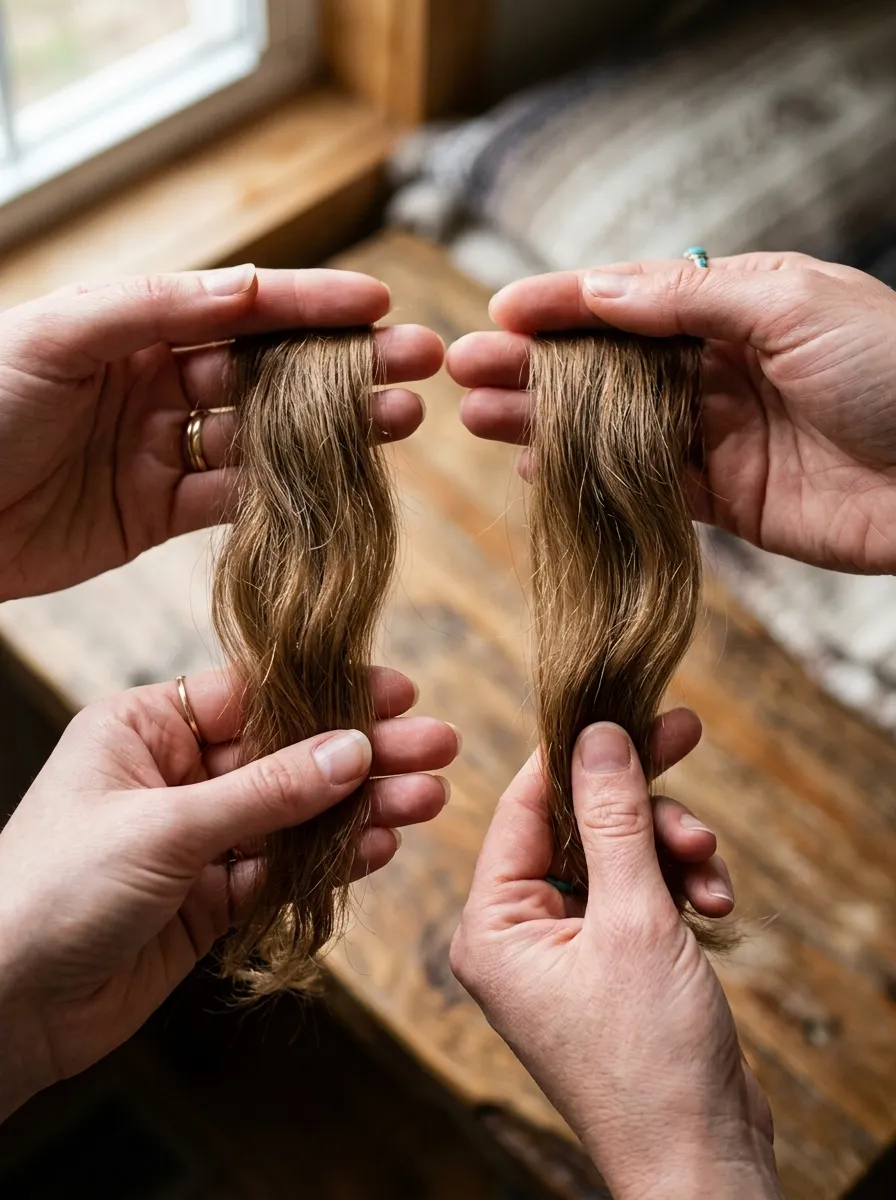
- After finishing one side, unclip a small matching section on the opposite side
- Hold both pieces together to compare length
- Adjust before moving further into the haircut, not after everything is already cut
Save the Back for Last
The back of the head is the hardest area to see clearly, so save it for when you have already built confidence from the front sections.
- Use a handheld mirror facing a larger mirror to check the back
- Cut small amounts at a time
- Take breaks to step back and look at the overall shape
Final Thoughts
Good sectioning is really the invisible skill behind every clean haircut. It slows you down just enough to prevent mistakes, keeps both sides balanced, and turns an overwhelming task into a series of small, manageable steps.
Save this guide for the next time you pick up the scissors, sectioning right is half the job done.
Common Mistakes That Ruin an Even Cut
The most common mistake is grabbing sections that are too big. Thick sections hide uneven lengths and make it easy to cut one side longer than the other. Another mistake is skipping the cross check and only comparing sides at the very end, when fixing it is much harder. A third is letting wet hair stretch as you cut, since wet hair is longer than dry hair and shrinks as it dries. And finally, many people part the hair carelessly, which makes every section that follows slightly off.
Who This Guide Suits Best
This guide suits anyone who cuts their own hair at home and wants professional looking results, as well as anyone learning to cut hair for the first time. It suits long hair especially, since the mistakes show up most clearly on longer lengths, and it suits anyone with thick or curly hair, where sectioning is the only way to keep the cut even. It also suits people who trim their family’s hair and want a simple, repeatable method.
Pro Tips for Clean Sectioning
- Always start with clean, detangled hair that is damp, not dripping wet, so the sections stay in place.
- Use a fine tooth comb to part and a rattail comb for precise lines, since blunt combs make messy partings.
- Clip each finished section tightly so loose strands cannot drift into the section you are cutting.
- Take a photo of the back with your phone before you start cutting, so you can check your progress as you go.
Frequently Asked Questions
How small should my sections be?
About one to two inches thick is right for most people. Thinner sections give you more control and a more even result, though they take longer. If you are new to cutting, start smaller and take your time.
Can I section dry hair?
You can, though damp hair is easier to part cleanly and stays in place better. If you section dry hair, use a light spray of water to dampen it first, and always cross check the lengths once the hair is dry.
Do I need to section short hair too?
Yes, even short hair benefits from sectioning, though the sections will be fewer and simpler. With short hair, the top and sides are the key areas to separate, since the shape depends on getting those two areas clean.


Pingback: Why Does Hair Become Oily So Fast?