
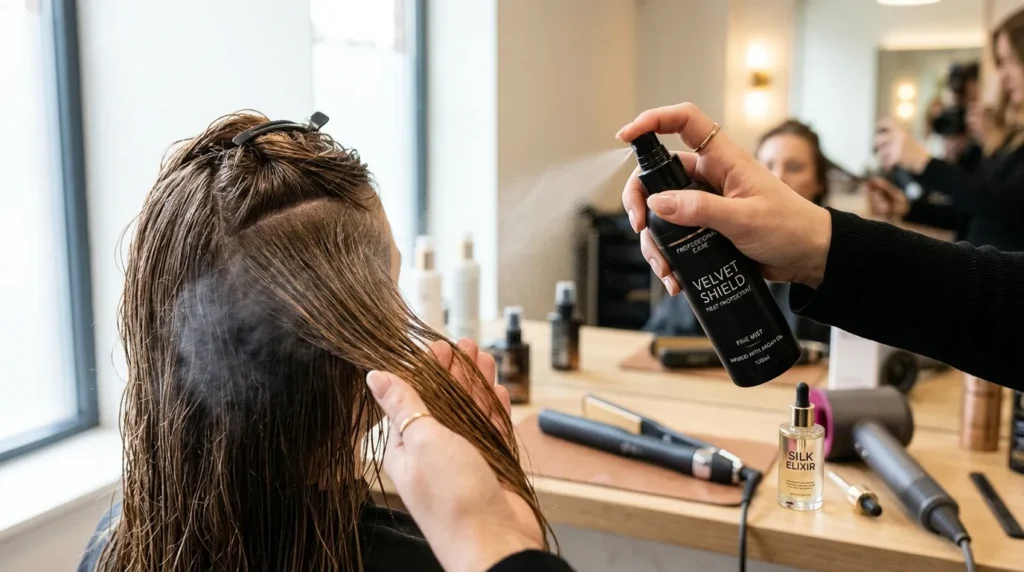

Heat styling gets a bad reputation, but the truth is you can straighten, curl, or blow dry your hair regularly without wrecking it, as long as you protect it properly beforehand. The key is not avoiding heat entirely, it is building a routine that shields your hair every single time. Here is the best way to protect your hair before any heat styling session. If you have natural curls, don’t miss our Best Way to Dry Curly Hair guide for techniques that help reduce frizz, preserve curl definition, and keep your hair healthy after washing.
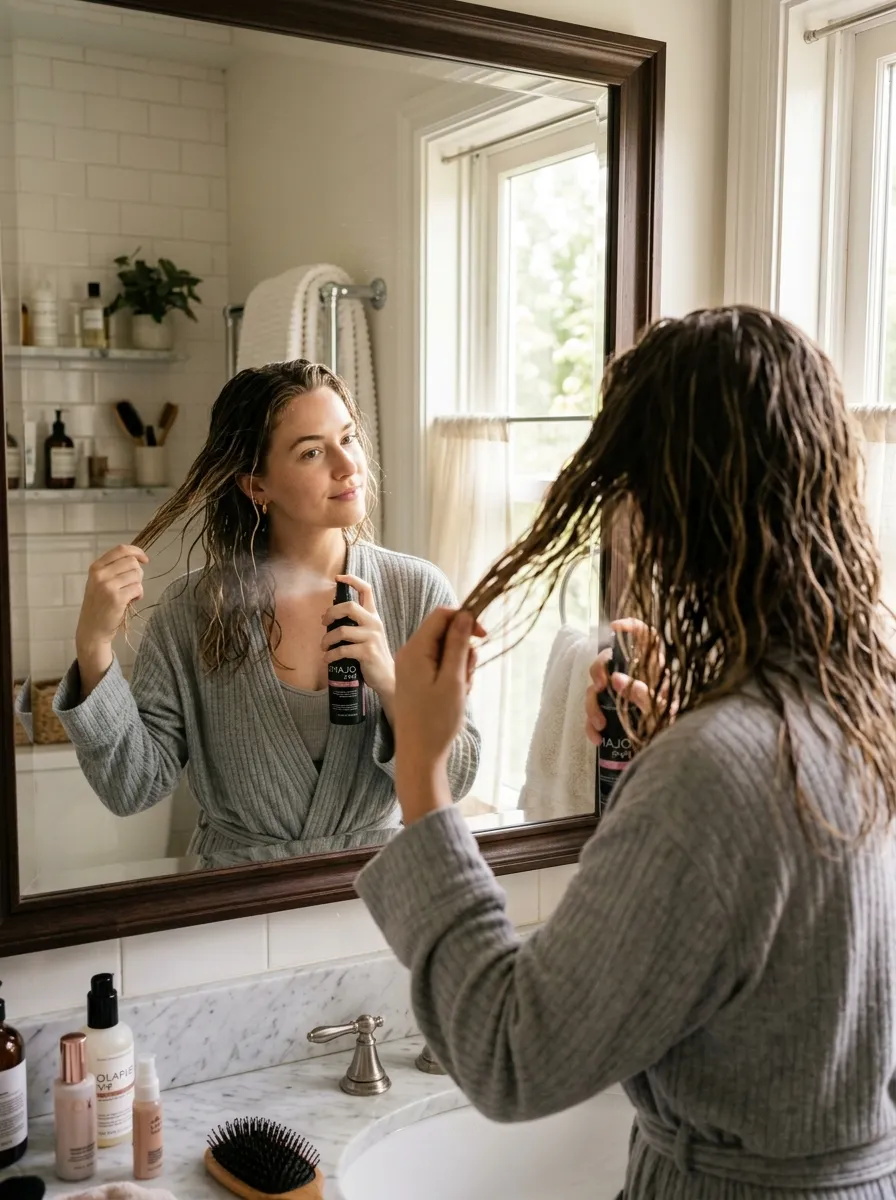
Never Skip a Heat Protectant
This is the foundation of protecting your hair, and it should happen every single time you use a hot tool, no exceptions.
- Apply protectant spray or cream evenly through damp or dry hair before styling
- Focus extra product on the ends, since they are the oldest and most fragile part of your hair
- Comb through after applying to make sure it is evenly distributed
- Reapply a light mist if you are styling in multiple heat passes
Heat protectants work by creating a barrier that reduces moisture loss and cuticle damage, so treat this step as non-negotiable rather than optional.
Start With Healthy, Hydrated Hair
Heat styling is far more damaging to hair that is already dry or brittle, since there is less moisture available to help it withstand the heat.
- Use a moisturizing shampoo and conditioner leading up to styling days
- Add a weekly deep conditioning treatment if you style with heat often
- Avoid heat styling hair that feels straw like or overly dry, and hydrate it first instead
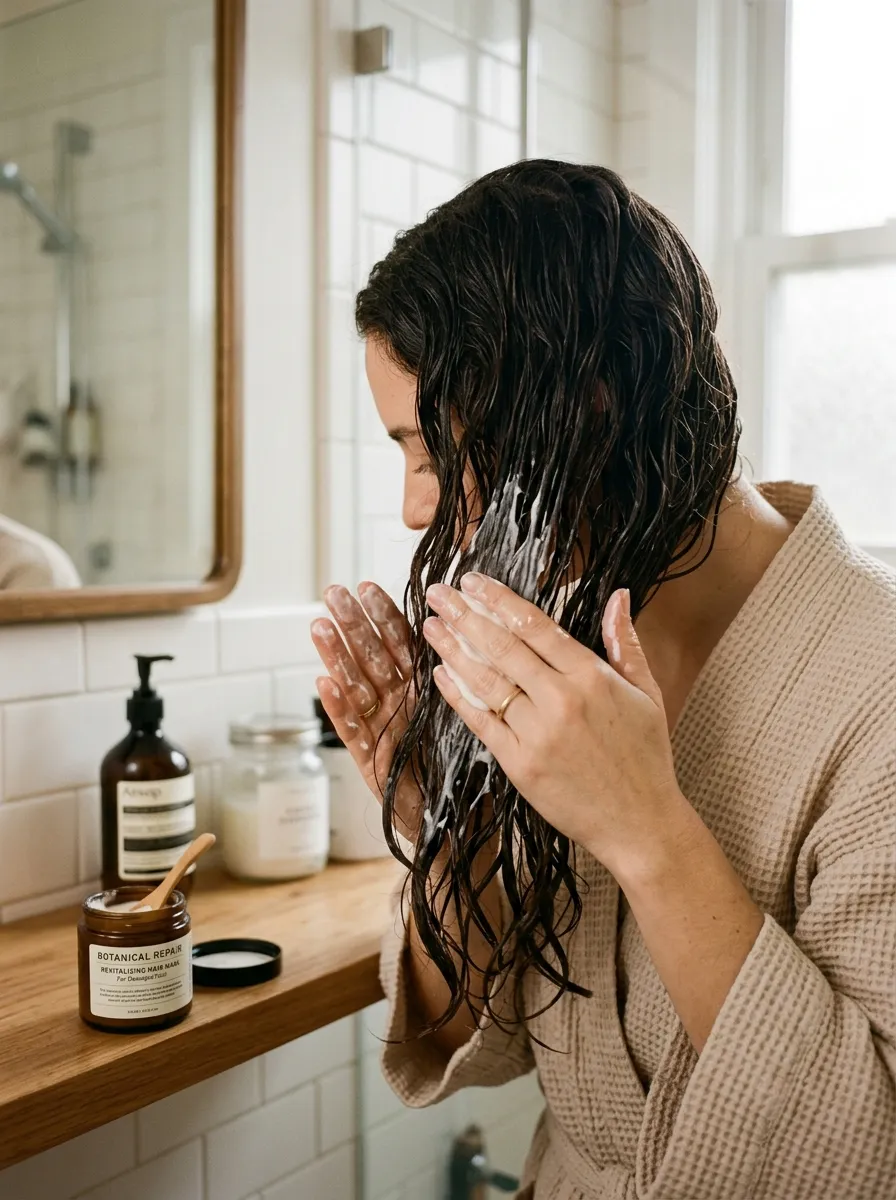
Well hydrated hair is naturally more flexible, which means it handles heat with far less breakage and frizz.
Dry Hair Fully Before Using Hot Tools
Using a flat iron or curling wand on hair that is even slightly damp causes the water inside the strand to essentially boil, leading to significant damage.
- Always blow dry hair completely before straightening or curling
- Check sections underneath the top layer, which often stay damp longer
- Avoid rushing this step, even if you are short on time
Skipping this step is one of the most damaging heat styling mistakes people make without realizing it.
Choose the Right Heat Setting for Your Hair Type
More heat does not mean better results, it just means more potential damage. Matching your tool’s temperature to your specific hair type protects it significantly.
- Fine or damaged hair should stay on low to medium heat
- Medium hair textures generally do well on medium heat
- Thick or coarse hair may need medium to high heat, but rarely the highest setting
- If your tool has adjustable heat, use the lowest setting that still achieves your desired style
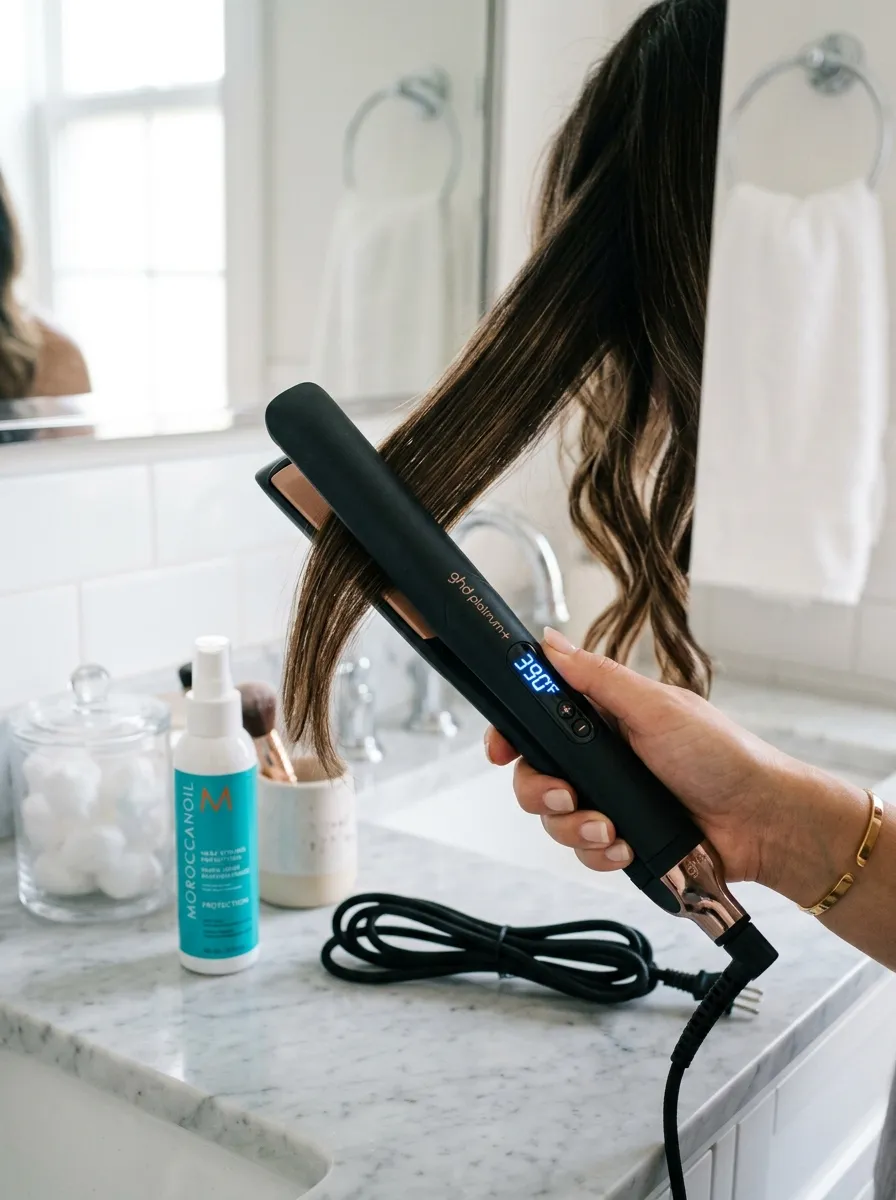
Using unnecessarily high heat is one of the fastest ways to cause long term damage, even with a protectant applied.
Limit Repeated Passes Over the Same Section
Going over the same piece of hair with a hot tool multiple times concentrates heat exposure in that exact spot, which adds up to real damage over time.
- Aim to get the style right in one or two passes per section
- Divide hair into manageable sections so no area gets excessive repeated heat
- If a section is not cooperating, add more product or check your technique rather than repeating the heat pass over and over
Give Hair Regular Breaks From Heat
Even with perfect technique, giving your hair time to recover between heat styling sessions supports its overall health.
- Alternate heat styling with air-dried or heatless styles when possible
- Reserve full heat routines for days when you truly need the polished look
- Use overnight braids or buns for texture without any heat at all
Final Thoughts
Protecting your hair before heat styling comes down to a few consistent habits, a good protectant, proper hydration, fully dry hair, and the right temperature for your hair type. None of these steps take much extra time, but together they make a real difference in how healthy your hair stays over months and years of styling. Save this guide for later so your next heat styling session works with your hair instead of against it.



Pingback: Best Way To Keep Hairstyle All Day - Strand Edit